Tuesday, March 26, 2013

Lionfish

Photo: Lionfish swimming among soft coralsWhat is a lionfish?
Lionfish are a grumpy looking type of fish with long dorsal fins that warns you to keep away from them- and for good reason. If anything gets to close to a lionfish, it will inject a poison into the animal/human.

While the venom is fatal to most small animals, it is not to humans, but will cause nausea and breathing difficulties. Lionfish are red and white striped, and look very pretty. Their fins also have these stripes, and are always very long. They are nicknamed the "turkey fish".

Map: Lionfish rangeWhere can lionfish be found?
Well, lionfish can be found in the water, of course. But to be more specific, lionfish are native to the reefs and rocky crevices of the Indo-Pacific. However, over time lionfish have spread their population and have moved into warmer reefs. In some parts of the world, lionfish are valued as food, but are more prized as aquarium trade.

They are easy to find, and they are always growing in population, and have started moving into the US. This causes some concern among people who worry that these dangerous fish pose environmental dangers. I wouldn't be too scared- these fish stay in the water and can only grow up to be 1 foot long.

Friday, March 22, 2013

The Silky Anteater

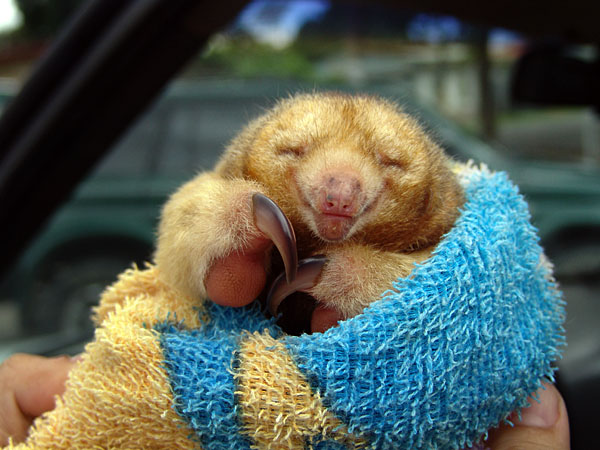
Top 10 Cutest Animals | Silky AnteaterSilky Anteaters are exactly their name- ant eaters! These slow, slothlike creatures' main and only source of food are ants. Normal Anteaters use their long, trunklike nose to consume the ants and suck them out of their hills, but the silky anteater has a short snout, and nibbles on ants instead.

Anteaters are very slow creatures, as I mentioned above- luckily their food is NOT very fast and is usually found in swarms. Your average anteater consumes about 5,000 ants every day.

Silky anteaters can be found in Central and South America. They are the smallest member of the anteater family, and are very hard to spot. In fact, it is very rare that you see them, as they are an endangered species, very small, and are nocturnal.

These tiny creatures can only grow up to be 1 foot long and typically weigh 14 oz- smaller than your average bottle of soda. Their small size definitely adds to their cuteness factor- but they have other cute points too, such as their gorgeous gold/tan colored fur and tiny snout. They have the tail of a monkey and live in the canopy of rainforests. This is another one of the things that makes this animal so unique- most anteaters live on the ground.


Friday, February 22, 2013

Fire Ant

Information on Fire Ants for Kids thumbnail
Fire ants are probably one of the more dangerous yet un-noticed insects there are- because they are often mistaken for normal ants. The only differences between regular ants and fire ants are their coloring and hill size. Normal ants are black in color and have relatively small hills, only about and inch or two tall. Fire ants are usually a reddish brown color and have hills that grow up to over a foot tall.


So what's so dangerous about a fire ant?

Well, let's start with the name. They must be called FIRE ANTS for a reason, right? While a normal ant will typically flee at the sight of a human, fire ants are very feisty and aggressive. They will attack you if you get too close to them, and automatically attack anyone who steps too close to their hill. A fire ant sting is far worse than a bee sting. The ants crawl up to the most annoying place, and then sting you with their razor shark pincers, leaving a stinging red welt. You can treat a fire ant bite by getting an over-the-counter cream at a local drugstore.

What fire ants eat

Fire ants are omnivores and will eat almost anything to keep alive. They typically live off of seeds, small plants, and animals that are left dead. Like other ants, they use teamwork to collect food to eat. However, instead of carrying the food, worker ants eat the food, bring it back to the nest, and then regurgitate it for all of the other ants to eat.

The nest is usually run by a queen ant, who breeds all the other ants in the population. Breeding and hatching usually takes place in the summer. If the eggs get fertilized they hatch as girls, and become worker ants or queens. If the eggs aren't fertilized, they become male ants.

Monday, October 8, 2012

Pink Dolphin


The Pink Dolphin- It probably looks like the wimpiest animal you've ever seen. Yet this creature can pack quite a punch. It eats PIRANHAS! Now, we all know piranhas are the kings of eating. They can demolish COWS in seconds. The dolphins' secret weapon is a super-long snout and a very flexible body that helps it get the piranha as it attacks. 

Other foods that pink dolphins indulge in is catfish, crabs, and even small turtles. While there is no proof of why these dolphins are pink, it is thought to be some kind of adaption to river water. They are known to become pinker when they are excited or surprised, which resembles blushing for humans.

Sadly, these beautiful creatures are endangered. The basins at the ends of the Amazon are becoming more populated, and this causes more pollution entering the river, which finally results in the accidental killing of the dolphins. Also, damming has limited habitat and mating territory. 

Thursday, October 4, 2012

Blobfish


When you look at the picture above, you probably think that the "creature" is from a horror movie or something. But the fish is real. It can only survive in the deepest depths of the sea, and is very rarely seen by humans. It is just lighter than water, which allows it to float above the sea floor without using any of it's energy.

Blobfish live 4000 feet deep in the ocean, which is dozens of times deeper than a human can survive. It is VERY rare that they swim at higher levels. Blobfish are facing extinction because of deepwater fishing. They survive off of crustaceans and small fish that live down at their level.

Blobfish are very lazy creatures. They are basically made of jelly, so they do not need to come equipped with muscles. They are known to just float around and wait for something edible to come by for their meals.


Tuesday, October 2, 2012

Black Rat

Beware- this cute face can fool you! This nasty little speck of dirt is the creature that was most likely the carrier of the black death, a plague that killed over 1/3 of the European country in the Middle Ages. It carried the plague through it's fleas, and spread off of ships to Europe. They originated in Asia, and once they landed in Europe, they spread to the whole world via cargo ships.


These rats now live all over the world, scavenging for whatever they can get at. They are omnivores, so it doesn't really matter to them what they eat. They mostly live off of fruits and nuts, like common tree squirrels. (If the whole world was available for eating and it was the trash can or berries and acorns, I think I'd choose the fruits and nuts too!)


Black rats are nocturnal. They are considered very poor swimmers compared to their cousin the brown rat, but are far better climbers than the brown rat. They have been known, when in danger, to flee upwards. Due to this ability, many rat nests are found in trees. The rat will hunt and nest in 2 different places, so that food never runs scarce.

Cats, owls, coyotes, weasels, and foxes all prey on the black rat.


Koala Bear

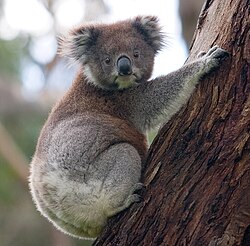
Full grown Koala- AWWWW!
Please welcome our next foreign guest, coming from the world down under.... THE KOALA BEAR!  Koala bears are native to Australia, where they live a somewhat happy life stuffing down as many eucalyptus leaves as they can bare and lounging in eucalyptus trees. However, life is not all fun and games for this cheerful bear...

Many koala bears are getting killed and are becoming endangered due to trees getting chopped down for housing developments. With no trees, there is no place for the bears to sleep in and no leaves to eat. To add insult to injury, the bears that DO survive are attacked by the dogs that come with the people that move into the housing districts.

Koalas become fertile at 2-3 years old. A healthy female can produce about 1 young a year, for about 12 years. Twins are very rare. The first set of twin koalas were Euca and Lyptus, who were born at the University of Queensland in April of 1999. Mating season is from December to March, and gestation period is generally 35 days.
Baby Koala- EEEWWWW!

Baby koalas, or "joeys", are born bald, blind, and earless. They usually will stay in a small stomach pouch of it's mother's until it can survive a little on it's own. More developed koalas will catch rides on their mom's back.